

Ghiyas-ud-Din Tughlaq’s Tomb is a historic mausoleum in New Delhi’s Tughlaqabad area, beside Tughlaqabad Fort. Its red sandstone, white-marble dome and enclosed plan make it a distinctive stop for anyone interested in New Delhi history and the remains of the old city.
- Location: Tughlaqabad area, beside Tughlaqabad Fort.
- Architecture: Red sandstone, a white-marble dome and a high-walled pentagonal enclosure.
- Access: Confirm current hours, entry charges and visitor rules before setting out.
The story and architecture of the tomb
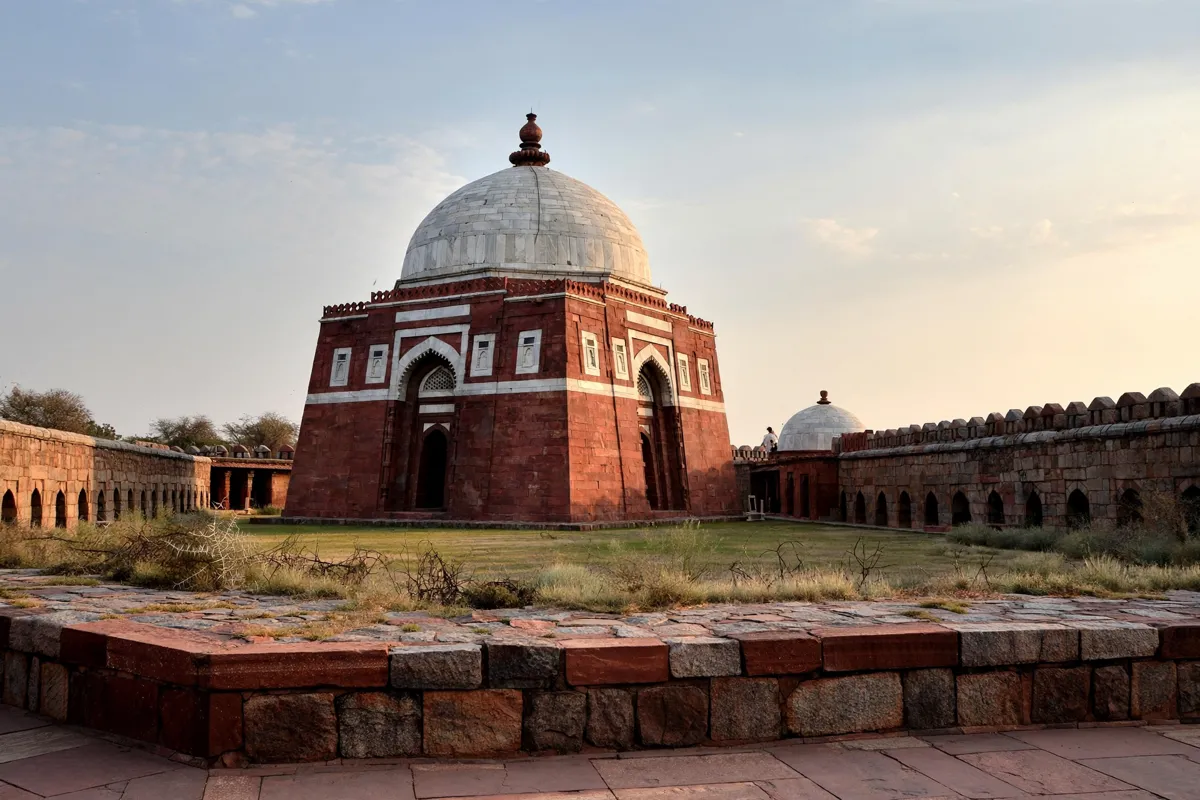
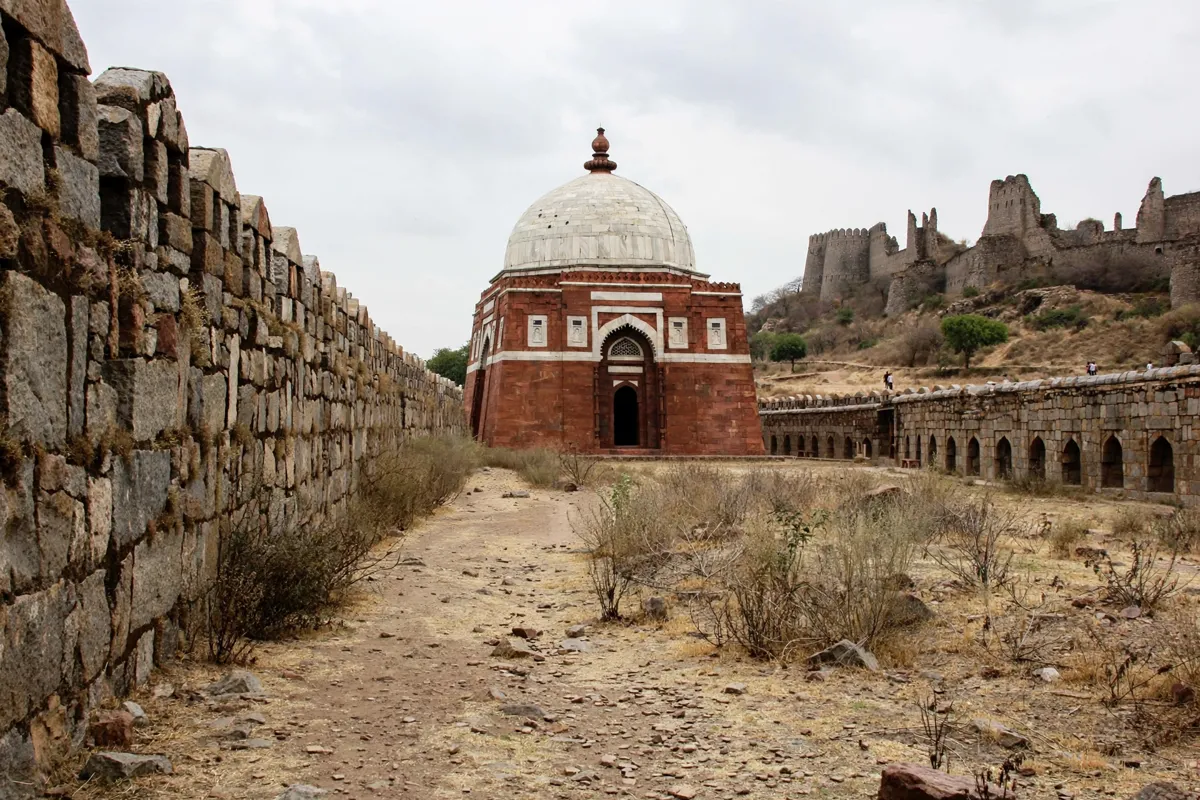
The South East Delhi district administration describes the tomb as constructed in 1325. It stands beside Tughlaqabad Fort, built by Ghiyas-ud-din Tughlaq in 1321; the fort’s ruins and the adjacent tomb are remains of the historic city of Tughlaqabad. The fort was abandoned in 1327.
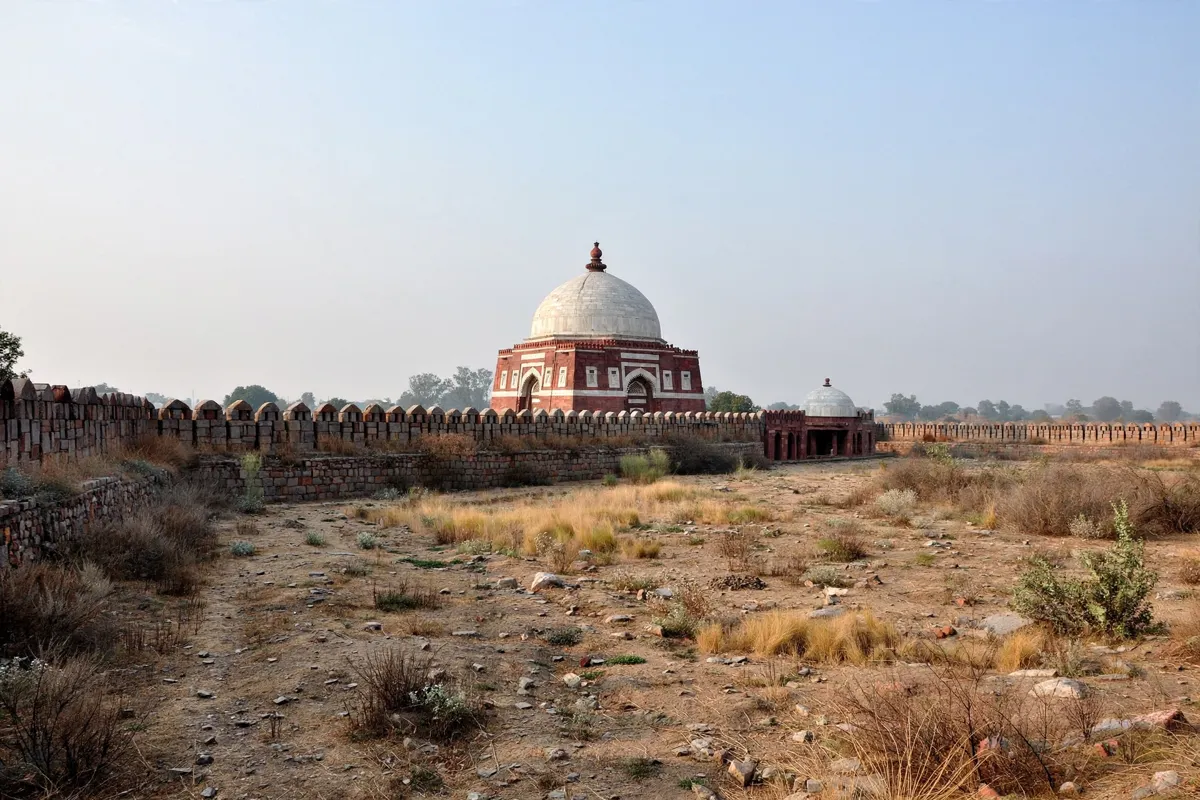
The mausoleum’s red sandstone contrasts with its white-marble dome. It sits within a pentagonal enclosure with high walls, giving the tomb a clearly defined setting. These details connect the monument’s architecture with the wider historic landscape around Tughlakabad.
Finding the tomb near Tughlakabad
The tomb is in the Tughlaqabad area of New Delhi, immediately beside Tughlaqabad Fort. From the three-star Kundan Palace hotel, the drive to the tomb takes about 28 minutes. The available sources do not establish a visitor entrance or a route from Jasola.
If you are planning to see both monuments, first confirm access arrangements for each.
What to look for at the monument
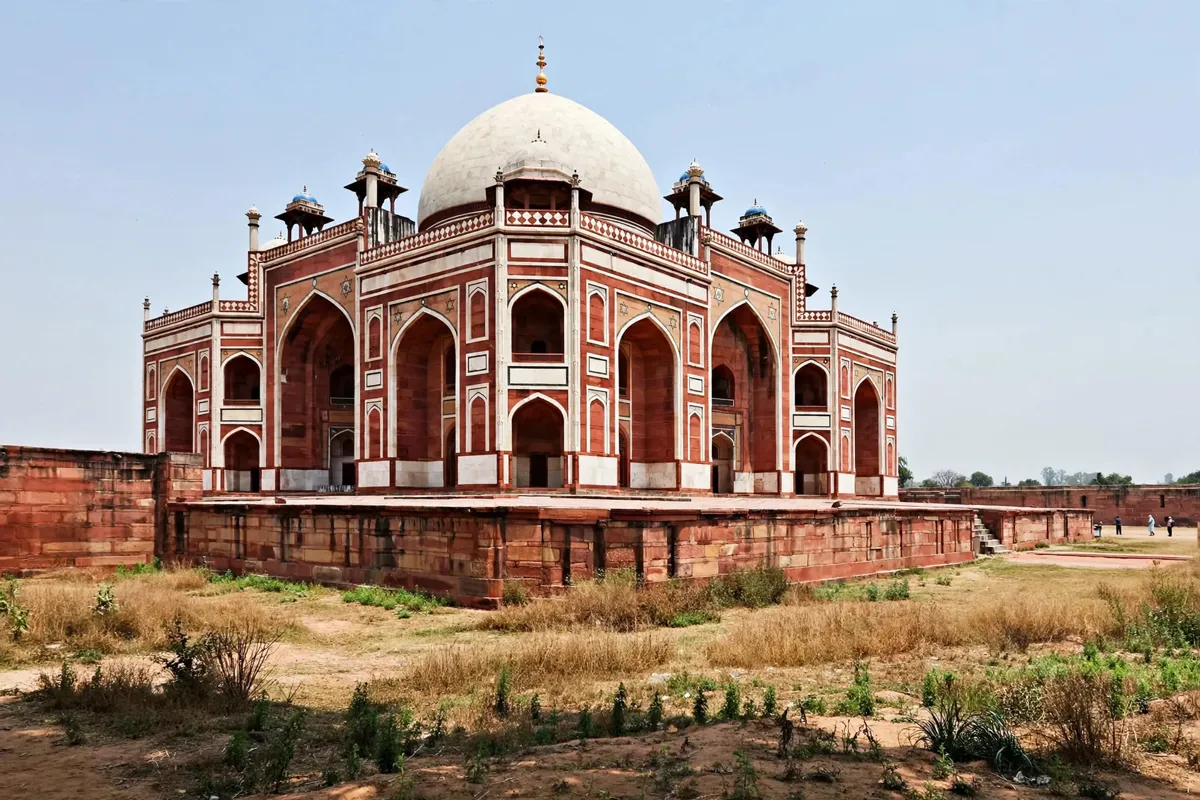
Start with the outside: look for the red sandstone walls and the white-marble dome, then take in the high-walled pentagonal enclosure as a whole. The dome and enclosed plan are defining features of the tomb, while the adjoining Tughlaqabad Fort ruins place the mausoleum within the historic city’s remains.
Taking time to notice both the materials and the enclosure helps make sense of the monument’s design. The tomb is a compact heritage stop to pair with the nearby fort, rather than a reason to assume other sites share the same access arrangements.
Opening hours, entry and visitor rules
The tomb’s current opening hours, weekly closing day, entry charge and visitor rules are not established. A Delhi government service-directory response says ASI monuments in Delhi generally open at sunrise and close at sunset, and that most open daily; it does not give this tomb’s entry fee.
Do not assume that Tughlaqabad Fort’s listed hours apply to the tomb. For current access details, check the South East Delhi district administration’s official site before you go.
Combining the tomb with a nearby heritage visit
Tughlaqabad Fort is the natural companion to the tomb because the two stand beside one another and are linked to the historic city of Tughlaqabad. You can plan them as a paired heritage visit, while checking access details for each site separately.
Adilabad Fort is another site in the area, about 1 kilometre east of Tughlaqabad Fort. Its position gives you another point of interest to consider when planning a wider look at Tughlakabad historical sites. Citywide travel logistics are separate from this local heritage pairing; getting around New Delhi from Jasola covers the broader context.
FAQs
Where is Ghiyas-ud-Din Tughlaq’s Tomb?
It is in the Tughlaqabad area of New Delhi, beside Tughlaqabad Fort.
What is the tomb made of?
The mausoleum is built of red sandstone and has a white-marble dome.
When was the tomb constructed?
The South East Delhi district administration describes it as constructed in 1325.
Can you visit the tomb and Tughlaqabad Fort together?
They stand beside one another, making them suitable to plan as neighboring heritage stops. Confirm access details for both before your visit.